Yes, you may still need probate even if there is a will.
In the UK, probate is required if the person owned assets in their sole name, such as property, large bank accounts, or investments.
You may not need probate if:
Use our Probate Checker to find out in mintues.
Do you actually need probate?
Find out in under a minute with our quick, simple checker. No complicated forms, just a clear answer based on your situation.
When someone passes away and leaves a will, one of the first questions families ask is:
“Do we still need probate?”
The honest answer is sometimes yes, sometimes no.
Having a will makes things clearer, but it does not automatically remove the need for probate.
In this guide, I’ll walk you through exactly when probate is required, when it is not, and how to tell the difference quickly. If you’re dealing with a loss right now, my aim is to give you clarity, not confusion. As always, we’re always here to help if you need someone to talk to.
Even if there is a valid will, you usually need probate if the person owned assets in their sole name, such as:
You may not need probate if:
If you’re unsure, you can use our quick probate checker tool. It will give you a clear answer in minutes.
Probate is the legal process of confirming that a will is valid and gives the executor the legal authority to deal with the estate.
Even with a will in place, institutions such as banks and the Land Registry often require formal legal confirmation before releasing funds or transferring ownership.
In simple terms: The will says who should inherit. Probate gives you the legal power to make it happen.
If there is a will, the person responsible for dealing with the estate is called the executor.
Their role is to:
In many cases, the executor is a family member or close friend, but it is an important role that carries legal responsibility.
If you’re planning ahead, choosing the right executor can make a significant difference to how smoothly everything is handled. You can read our guide on to choosing executors of a will.
In my experience, probate is usually required in the following situations:
If the deceased owned a property in their name only, probate is almost always needed to sell or transfer it.
Most UK banks have thresholds (often between £5,000 and £50,000). If the balance exceeds this, probate is required before funds are released.
Financial institutions typically require probate before transferring or liquidating these assets.
This includes:
These nearly always require probate. Additionally, some banks and businesses may request probate, meaning you’ll have to obtain probate to close down accounts. This is entirely dependent on their own internal policies and there isn’t much you can do about it.
This is where many people are surprised.
You might not need probate if:
If everything is owned jointly (for example, with a spouse), it usually passes automatically to the surviving owner. This could include joint banks accounts, property and joint investments.
If the total estate value is low, banks may release funds without probate.
Trust-held assets sit outside the estate and do not require probate.
These often pay directly to a named beneficiary so probate won’t be needed.
For an in-depth look at whether your situation requires probate, check out our guide, when is probate required.
This is a common misconception.
There is no single person who “approves” whether probate is required.
Instead:
If you get this wrong, it can delay the entire process, which is why many people seek guidance at this stage. The best thing to do is to check with every organisation when you notify them of the death.
Yes, absolutely.
A will can be read as soon as it is located after death.
You do not need probate to:
However, you do need probate to act on it in most cases.
Not everything forms part of the probate estate.
Assets that typically bypass probate include:
Understanding this distinction can significantly reduce the amount of work involved.
If probate is required, the process usually looks like this:
Each step must be completed carefully to avoid delays or legal issues. For an in-depth look into the key stages take a look at our guide on how long does probate take.
This is where I often see problems.
Applying for probate when it’s not needed, can waste time a and money. Similarly, not applying when it is required can lead to:
In some cases, executors can even be held personally responsible for mistakes.
If the estate is straightforward, many people choose to handle probate themselves.
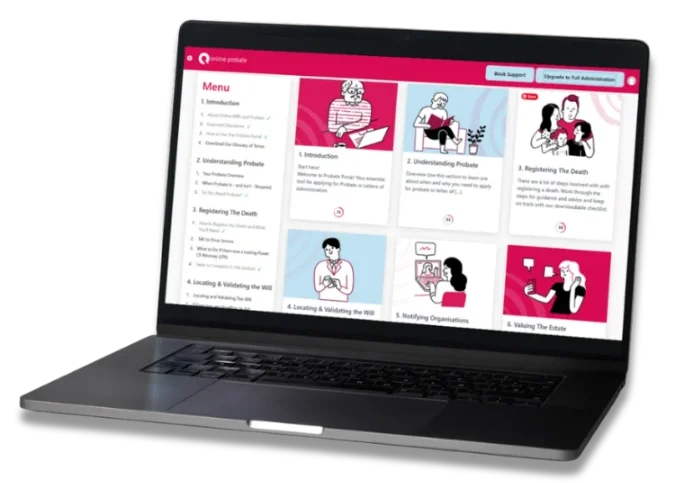
That is exactly why we created our DIY Probate platform, designed to guide you step by step while still giving you access to professional support when needed. The DIY Probate Portal is a step-by-step, guided platform designed to help you understand and manage probate in your own time, at your own pace.
It is not just a collection of documents or generic advice. Instead, it walks you through the process in a structured, practical way so you can clearly understand the entire process of applying for probate; from registering the death and notifying organisations (with letter templates), can valuing the estate to calculating inheritance tax.
However, professional help is worth considering if:
There is no right or wrong choice, only what is right for your situation.
Complete Probate yourself with step-by-step guidance, templates and support: The only Probate resource designed by a Probate Solicitor.
If you take one thing from this guide, let it be this:
Do not guess.
Every estate is different, and small details can change the answer completely.
You can get a clear answer here in just a few minutes by using our Probate Checker. Once you have confirmed that probate is needed, the next step is understanding what it will cost. Read our full guide: how much does probate cost if you do it yourself in 2026?
Having a will makes the process clearer, but it does not remove the need for probate.
The key is understanding what assets are involved and how they are owned.
If you are currently dealing with a loss, please remember that it is okay to take this one step at a time. Probate can feel overwhelming, but with the right guidance, it becomes far more manageable.
You may not need probate if the estate is small, assets are jointly owned, or everything passes directly to named beneficiaries.
Financial institutions and asset holders determine whether probate is required before releasing funds or transferring ownership.
Yes. A will can be read immediately, but probate is usually needed to carry out its instructions.
Joint assets, pensions, life insurance with named beneficiaries, and trust-held assets typically bypass probate.