

If you’re wondering how to do probate yourself in the UK, you’re not alone.
Many executors assume they need a solicitor to handle everything. In reality, probate is often a structured, administrative process that you can manage yourself. You just have to know what needs doing and which order to do them in.
That said, it’s completely normal to feel unsure at the start. There are forms to complete, organisations to contact, inheritance tax calculations, and responsibilities to manage. However, once the process is broken down into clear steps, it becomes far more manageable.
As a qualified Probate Solicitor, I’m often asked whether people can realistically complete probate without a solicitor. The answer, in many cases, is yes.
Let’s walk through how to do probate yourself.
What does “doing probate yourself” actually mean?
Doing probate yourself simply means taking responsibility for administering the estate rather than instructing a solicitor to do it on your behalf.
In practical terms, this involves:
- Gathering information about the deceased’s assets and liabilities
- Completing any required inheritance tax forms
- Valuing the estate
- Applying for probate (or letters of administration)
- Collecting assets and settling debts
- Distributing the estate to beneficiaries
While that might sound like a lot, each step follows a logical order. Once you understand that structure, the process becomes much clearer.
If you’re not sure if Probate is required, use our Probate Checker for a quick answer, based on your exact circumstances.
How to do probate yourself in the UK (step by step)
Although every estate is slightly different, the probate process generally follows the same stages.
1. Register the death
Before anything else, the death must be formally registered. You’ll need multiple copies of the death certificate, as most organisations will request one.
2. Locate the will
Next, find the will (if there is one). This confirms who has been appointed as executor and how the estate should be distributed.
If there is no will, the process is slightly different and follows the rules of intestacy.
3. Value the estate
This is one of the most important steps.
You’ll need to identify and record:
- Bank accounts
- Property
- Investments
- Pensions
- Personal possessions
- Any debts or liabilities
It’s essential to establish accurate values at the date of death, as this will determine whether inheritance tax is due.
4. Complete inheritance tax requirements
Depending on the value of the estate, you may need to complete inheritance tax forms. Unfortunately you intially have to apply for a an inheritance tax reference number, so make you do this early in the process if you suspect inheritance must be paid. This is one part that can really extend the wait time when applying for grant of probate.
Even if no tax is payable, you will usually still need to submit information to HMRC. This stage often causes the most confusion, which is why clear guidance is so important.
5. Apply for probate (or letters of administration)
Once you’ve gathered the necessary information, you can apply for probate.
If there is a will, you apply for a Grant of Probate.
If there isn’t, you apply for Letters of Administration.
This gives you the legal authority to deal with the estate.
6. Collect assets and settle debts
After probate has been granted, you can begin collecting funds from banks, selling property if needed, and settling any outstanding debts.
It’s important to ensure all liabilities are paid before distributing the estate.
7. Distribute the estate
Finally, once everything has been accounted for, the remaining assets can be distributed to the beneficiaries in line with the will or intestacy rules.
At this stage, it’s good practice to keep clear records of all transactions.
How long does probate take when you do it yourself?
This is one of the most common questions.
In most cases, probate in the UK takes between 6 and 12 months, although simpler estates can be completed more quickly.
The timeline depends on several factors, including:
- How quickly you can gather information
- Whether inheritance tax is involved
- How responsive financial institutions are
- Whether there are any complications or delays
Working through the process in a structured way can help avoid unnecessary delays.
Do you need a solicitor for probate?
Not always. In many cases, people will be able to completed probate themselves, particularly where:
- The estate is relatively straightforward
- There are no disputes between beneficiaries
- The assets are easy to identify
However, there are situations where professional advice is advisable, for example:
- Complex estates
- Overseas assets
- Disputes or unclear wills
- Significant inheritance tax considerations
The key is understanding your situation and choosing the right level of support.
Probate without a solicitor: what people struggle with
In my experience, the challenge isn’t usually the individual tasks. Nine times out of ten it’s the lack of structure.
People often tell me they feel:
- unsure what to do first
- worried about making mistakes
- overwhelmed by paperwork
- uncertain whether they’ve missed something
That’s exactly where having a clear, guided process makes all the difference.
A simpler way to handle probate yourself
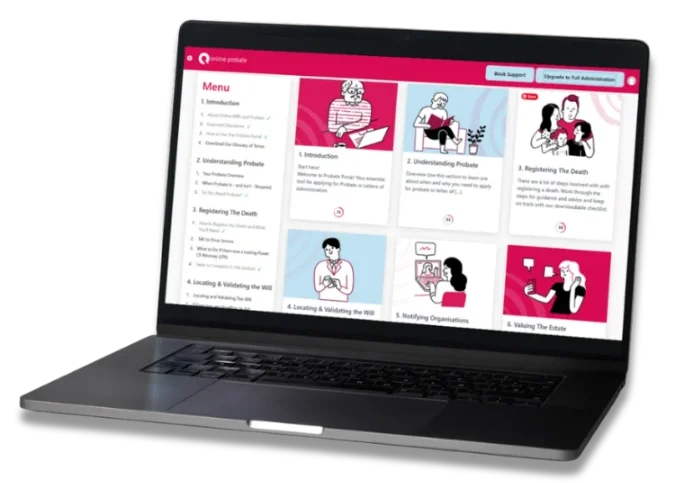
Over the years, we’ve seen just how much stress probate can cause when people are left to figure it out alone. Especially, when families are grieving.
That’s why we created the DIY Probate Platform.
It’s designed to guide you through the entire process, step by step, with:
- clear instructions at each stage
- downloadable templates and letters
- tools to help you record assets and liabilities
- structured sections so you always know what comes next
- the ability to track your progress as you go
In other words, it gives you the structure and reassurance most people are missing.
Explore the DIY Probate Platform
You don’t have to do it completely alone
Although many people choose to handle probate themselves, it’s important to know that support is always available. If you need guidance or reassurance, you can speak to our team.
And if the estate turns out to be more complex than expected, you can upgrade to a full probate administration service at any point. This gives you complete flexibility. You can start the process yourself and get everything in order and then hand it over to an expert when and if you need it.
Final thoughts
So, can you do probate yourself in the UK?
In many cases, yes.
The process isn’t always simple, but it is structured. And with the right guidance, it becomes far more manageable than most people expect.
The key is having a clear roadmap to follow. That’s what turns probate from something overwhelming into something you can work through, step by step. Please feel free to ask for help at any time.